Natural ventilation systems are quieter than fan systems and provide more daylight, but require more management to maintain uniform temperatures and air quality inside the horse barn. figure 2. natural ventilation systems rely on the thermal buoyancy properties of air to remove heat, moisture and air contaminants from the barn during colder months.. Barn heating and ventilation in this adaptation from horse housing: how to plan, build and remodel barns and sheds, award-winning authors richard klimesh and cherry hill explain how a good barn design addresses airflow, temperature regulation and humidity.. Horse stalls. ventilation is paramount in horse stalls, and plays an important part in the welfare of the horse. horse stalls are usually in barns, but they can be attached to moving vehicles for horse transport and cross country..

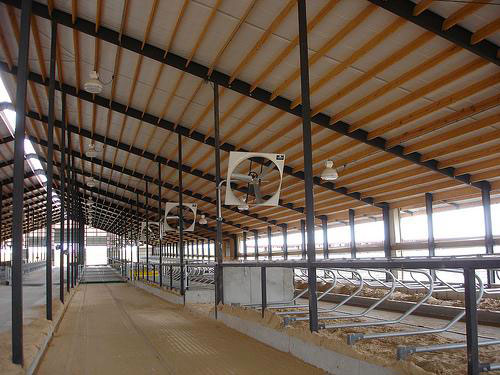

Barn fans can greatly help to move air around, but you need to make sure that you buy the right fans for the job. attaching a house box fan to the front of your horse’s stall is actually a significant fire risk.. For most horse barns, an operating temperature of 10°c is quite common and minimizes heating costs. calculate specific heating requirements for each stable, but a guideline for a reasonably well-insulated barn with normal ventilation rate is 500–1,000 watts per horse (1,700–3,400 btu/hr/horse).. Horse barn fans proper ventilation is one of the most important features of a barn. when natural ventilation needs a boost, classic equine equipment has the answer. when natural ventilation needs a boost, classic equine equipment has the answer..
